
Richard Werner Explains How Banking Really Works
Simple terms for the average person!
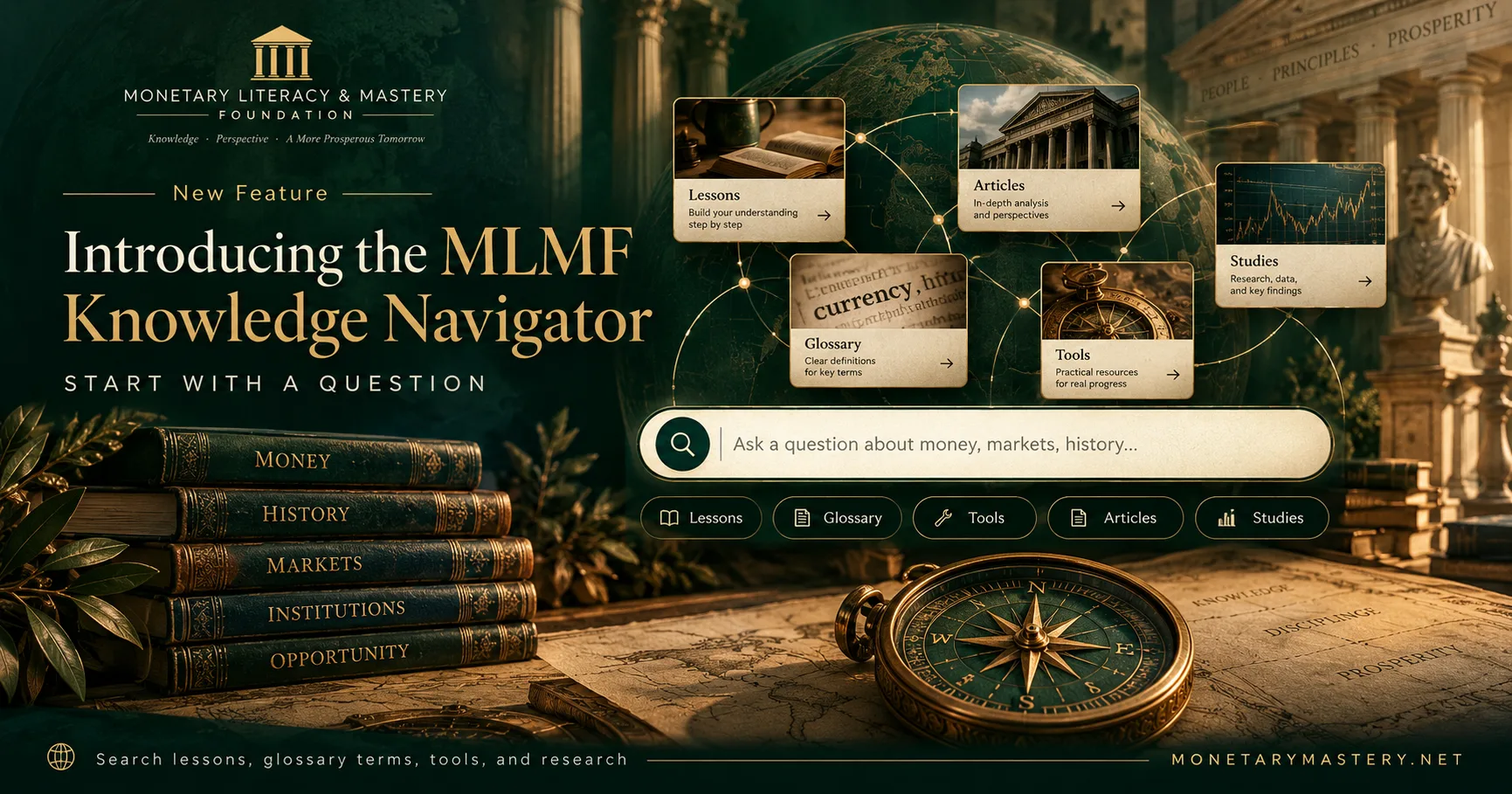
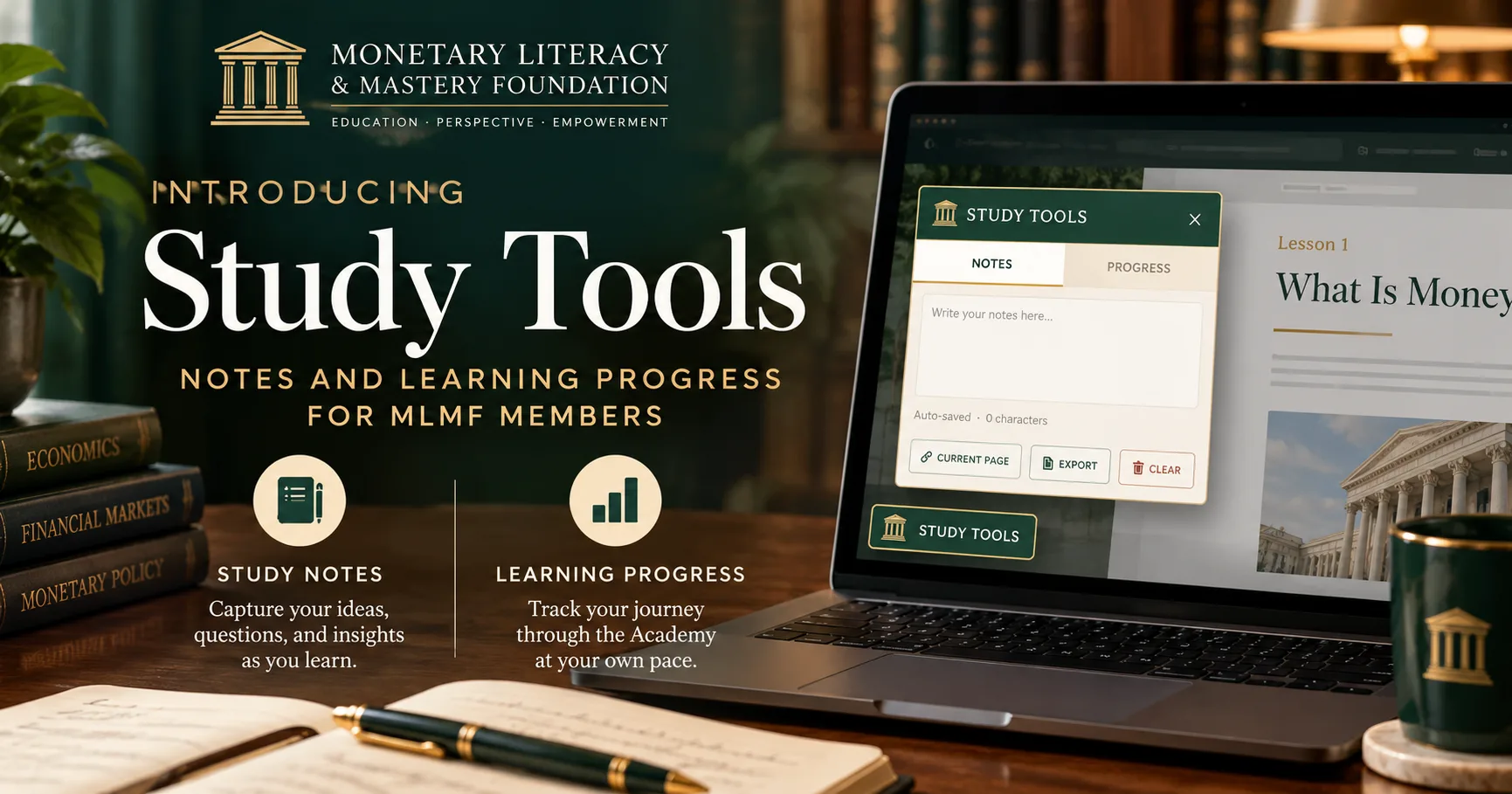
We have upgraded the Monetary Literacy & Mastery Foundation’s original Study Tools into something much more useful: Instead of functioning as a small collection of study utilities, it now helps you track lessons, take notes, save resources, monitor your progress, and return to where you left off.
Smith had some good observations about inflationary policies, not least that “Among the champions of paper currency there are no doubt, knaves, many a one, who know very well what they are about, and whose aim is to defraud the creditor, public and private, by paying off the debt with depreciated paper.”
The Knowledge Navigator is designed as a learning tool, not simply a forum search. More than 100 curated MLMF resources are indexed, including core curriculum, Extended Studies, Essential Reading, documentaries, interactive tools, Special Studies, featured concepts, and dozens of glossary terms.
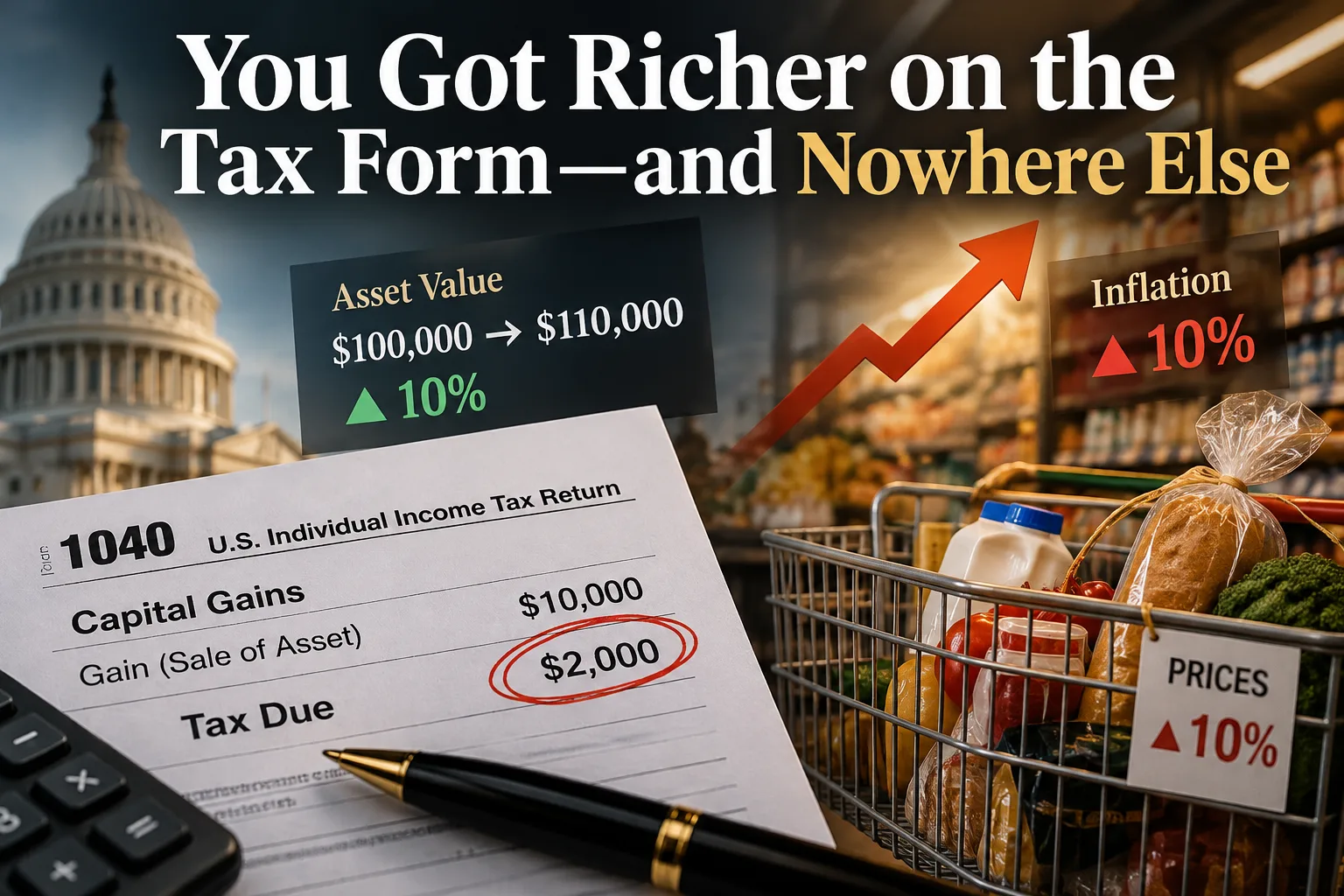
Imagine buying an asset for $100,000 many years ago. That $100,000 represented a certain amount of purchasing power at the time. Years later, inflation may mean that it takes $150,000 just to command the same general purchasing power. If you sell the asset for $150,000, it may look as though you earned a $50,000 profit. In real terms, however, you may simply have preserved the purchasing power of your original investment. The tax calculation does not necessarily see it that way. It sees an asset
Understanding how to manage money is important. Understanding the system that creates, distributes, and determines the value of money is something entirely different.
Learning is easier when you can keep track of what you are studying, save important thoughts, and return to where you left off.
Government borrowing is a claim on future income. When the Treasury issues bonds, it receives money now and promises to pay interest and principal later. Those future payments must come from somewhere. In practice they come from future tax revenues, from further borrowing, or from money creation. Each route imposes costs on people who were not yet voting, working, or in many cases even born when the original spending occurred.
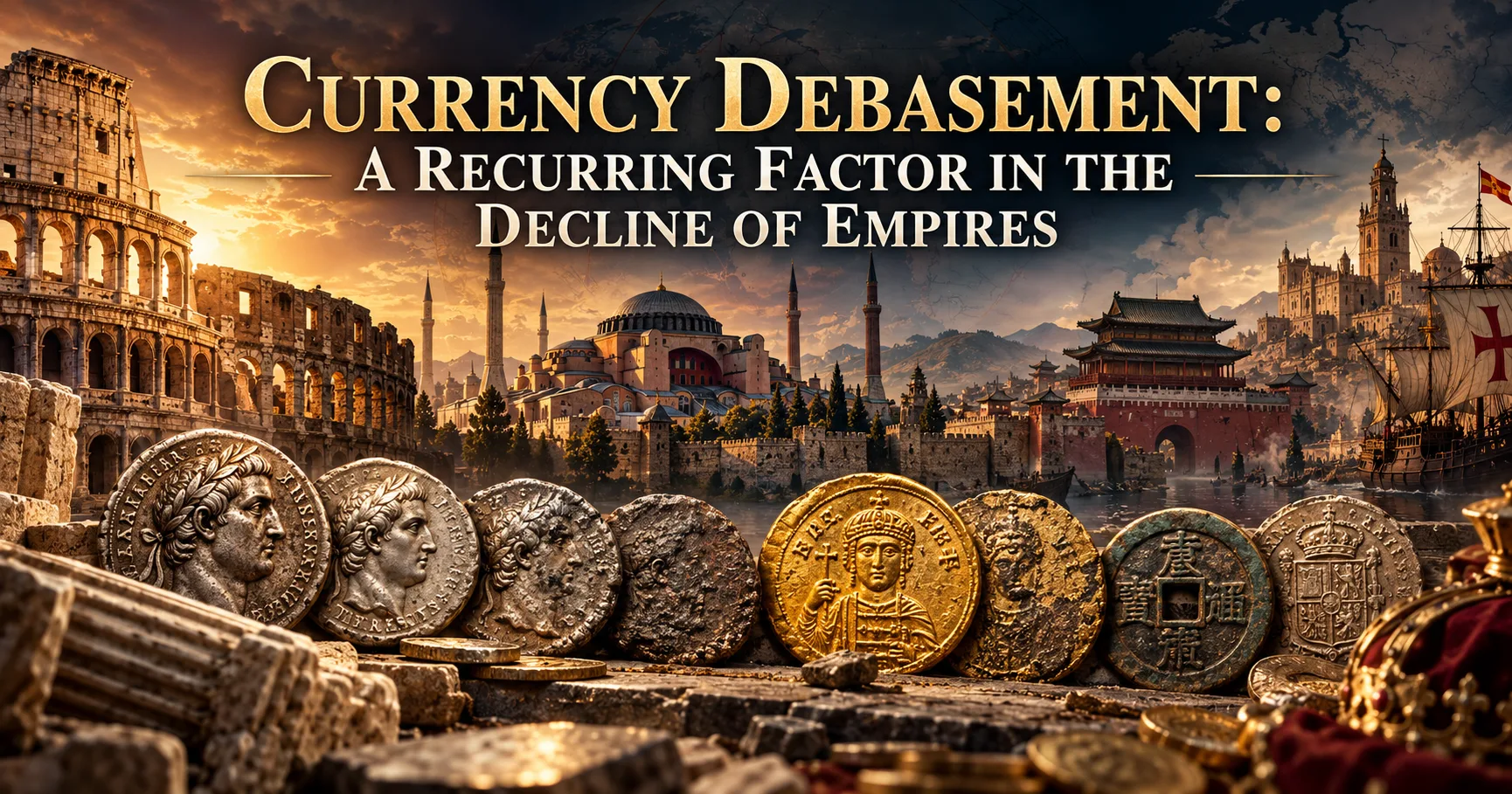
Major empires rarely collapse for a single reason. Military overextension, administrative decay, external pressure, demographic shocks, and institutional failure all contribute. Yet across widely separated times and places, one pattern appears with striking regularity: when fiscal pressures mounted, rulers debased the currency.
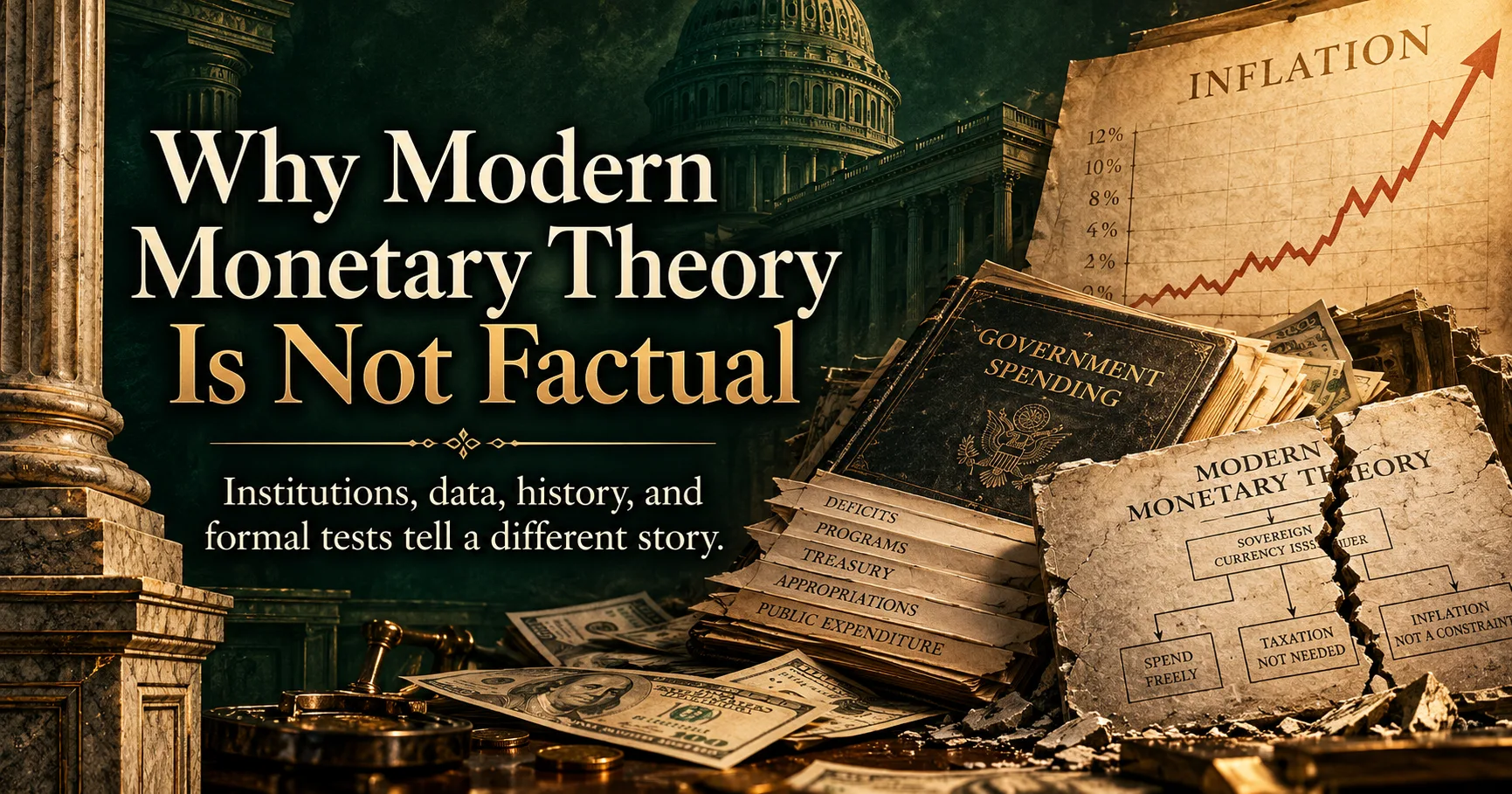
Several of MMT’s central descriptive claims do not match institutional reality, its inflation framework struggles with observed data, formal empirical tests reject its policy rules, and the approaches associated with it have a repeated record of producing high inflation, currency instability, and falling real wages.
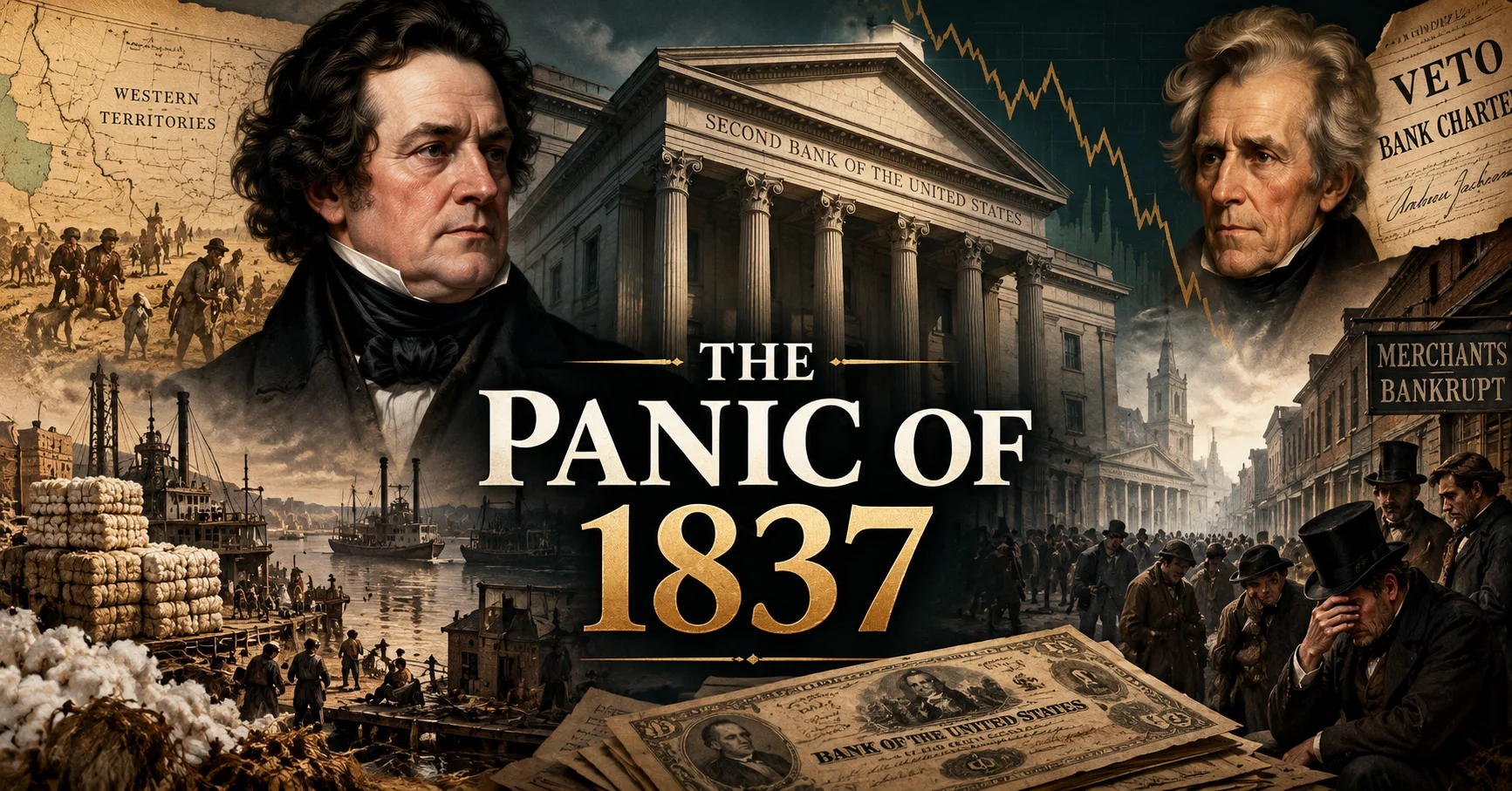
The Second Bank of the United States caused the Panic of 1837 through a deliberate, institution-saving policy reversal that crushed the economy it had previously inflated.
Most discussions of tax policy treat revenue as a simple product of rates and a fixed base. Raise the rate, collect more money. Lower the rate, collect less. This arithmetic view is incomplete.