
The Money Detectives #08 — Who Pays When Government Spends More Than It Collects?
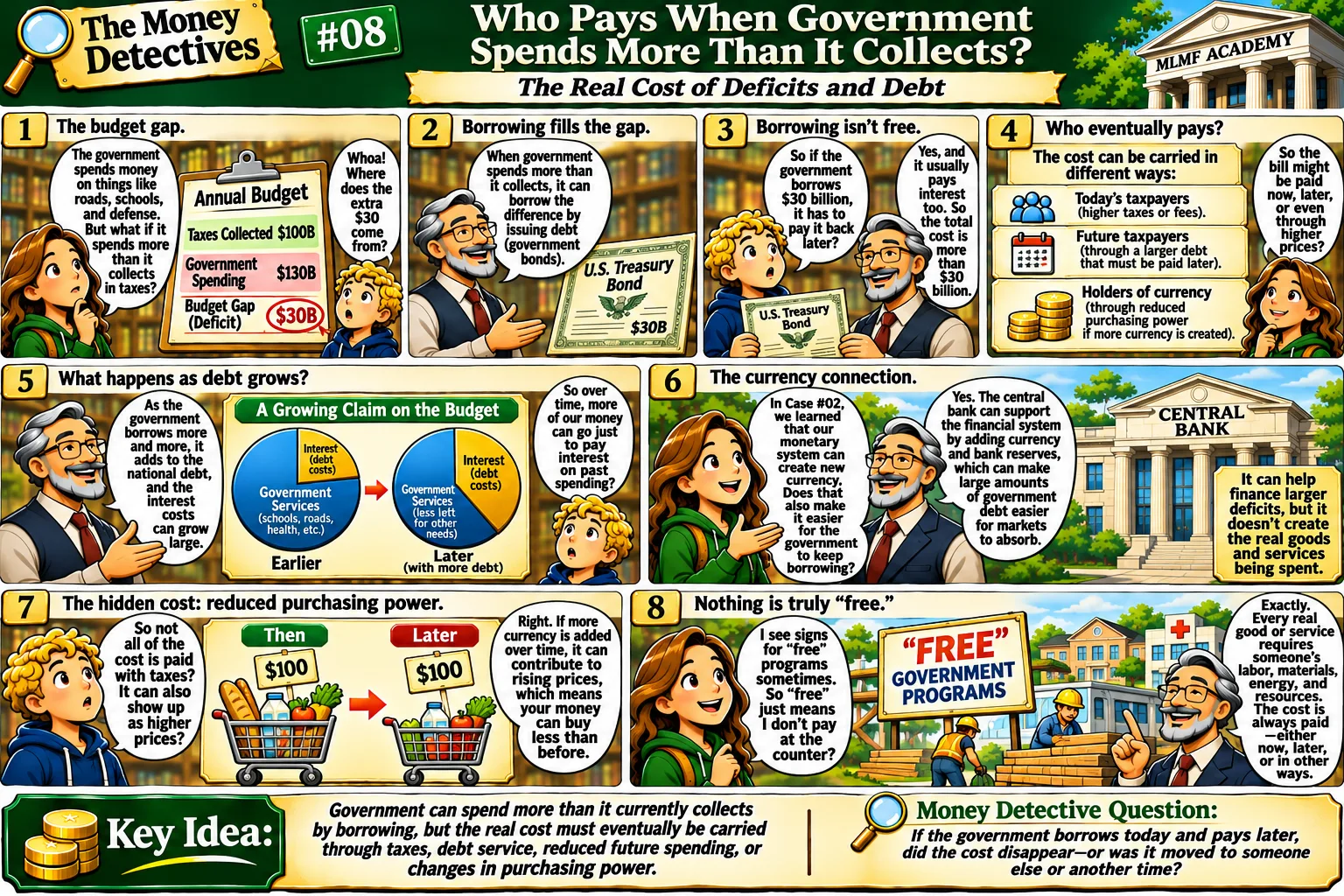
Governments sometimes spend more than they collect in taxes. The difference is called a deficit, and it is usually covered by borrowing.
This comic introduces a simple but important question: if the government spends today and pays later, who ultimately carries the cost?
What This Comic Introduces
After reading, learners should understand that:
A deficit happens when government spending is greater than current tax revenue.
Governments can borrow the difference by issuing debt.
Borrowing creates future interest costs.
The cost of deficit spending can show up through taxes, future budgets, debt service, or reduced purchasing power.
Creating more currency does not create more real goods, services, labor, or resources.
A program may be free to the person receiving it, but the real resources still have to come from somewhere.
Money Detective Question
If the government borrows today and pays later, did the cost disappear—or was it moved to someone else or another time?
Encourage learners to think beyond the word “free” and ask where the labor, materials, energy, and resources needed for government spending actually come from.
For deeper study: Continue with MLMF’s lessons on government debt, monetary expansion, inflation, and purchasing power.