

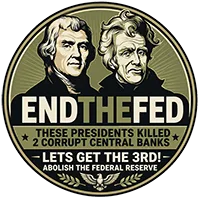
I have written about inflation before but I think it is more important than ever to revisit the topic as consumer and retail prices continue to rise at rates not seen since the 1970s, and major workers’ strikes continue to afflict and disrupt the U.K. economy.
It was economist Milton Friedman who once said that inflation is always a monetary phenomenon, so with that in mind today we will first look at how money came about, what money is, and what the government has done to money or how the government has corrupted it. My hope is that after you have read this you will better understand why as banker Felix Somary once said: “the state alone is responsible for inflation: inflation without government, or indeed against the government, is impossible.”
The Origins of Money
The question of what money is never seems to result in a straightforward answer, but we can go back in time and perform what Ludwig von Mises, a classical Austrian economist, called a regression theorem.
In plain English, it means tracing money backward through history to understand how it evolved and what its essential nature is.
In early human society, exchange was limited. Humans lived as hunter-gatherers in small groups, with little need for trade beyond survival within the group.
As societies grew into tribes, barter emerged. People began exchanging goods and services directly, but barter had a fundamental limitation: both parties had to want what the other offered at the same time.
Over time, certain goods—such as cattle, shells, stones, and precious metals—became widely desired. These became what von Mises called the most marketable commodities, eventually evolving into money.
What Money Is
Historically, gold, silver, and copper have functioned as money for roughly three thousand years because they were widely desired, durable, and easily transferable.
These characteristics allowed them to facilitate indirect exchange, enabling specialization across society. Once people no longer needed to produce everything they consumed, trade expanded, and economies grew.
With money came the development of towns, cities, nations, and empires, along with increased trade and economic complexity.
From this evolution, one key insight emerges: money must not only hold value at the moment of exchange, but also preserve its value over time.
How Governments Enter the System
Governments began influencing money in antiquity. Greek and Roman authorities realized that controlling coinage allowed them to standardize trade, finance wars, and expand empires.
But granting the state a monopoly over money creation also concentrated power. As Lord Acton observed: “Power corrupts and absolute power corrupts absolutely.”
The Roman silver denarius initially maintained high integrity and helped support Rome’s expansion. However, by the second century A.D., the empire began debasing its coinage by reducing silver content while keeping face value unchanged.
This debasement functioned as an early form of inflation. As coins lost intrinsic value, people demanded more of them for the same goods and services.
Over time, continued debasement reduced trust in the currency, and by the collapse of Rome in 476 A.D., the coinage had lost most of its silver content.
The British Experience
We could argue that the same process has been occurring in Britain. Before World War One, Britannia still ruled the waves and the sun never set on the British Empire as its colonies were dotted across the four corners of the planet.
Britain had also been on a gold standard since 1717, and the pound was as good as a gold sovereign. The sterling coinage also had a constant silver content of 92.5 percent.
Whatever one might think of the Victorian Age and pre-1914 Britain, one has to say that sound money—meaning currency not subject to inflation—coincided with Britain becoming an industrial and commercial powerhouse.
From Sound Money to Inflation
So what happened to the pound? Like the Romans before them, the British Empire overextended itself. Wars, aside from their devastating human toll, also required enormous financial resources.
By 1947, the pound was no longer equivalent to a gold sovereign, and sterling coinage had been stripped of all its silver content.
With the abandonment of sound money, governments were able to issue paper currency in expanding quantities, supported by the institutional framework of the Bank of England.
As the British Empire declined, the focus of economic policy shifted inward. The political emphasis moved toward expanding the role of the state and implementing a social model aimed at providing broad welfare support “from cradle to grave.”
This shift was reinforced by the aftermath of two world wars, which made large-scale state intervention more socially and politically acceptable.
The Expansion of the State
Politicians moved away from the fiscal discipline of the Victorian era, when sound money kept government spending below roughly 10 percent of GDP.
In contrast, the modern “age of inflation” has seen the state expand to more than 50 percent of economic output in many advanced economies, accompanied by historically high levels of taxation.
Monetary expansion has enabled this growth by allowing governments to finance rising expenditures without immediate taxation constraints.
Misdiagnosing Inflation
When people are told that inflation is caused by Brexit, greedy corporations, rising food prices, foreign holidays, trade unions, or external political events, they are only seeing surface-level explanations.
The deeper argument is that inflation is fundamentally a monetary phenomenon, and therefore rooted in the creation and management of money itself.
As Felix Somary stated: “inflation without government is impossible.”
Conclusion: The Policy Question
The central question that follows is not merely diagnostic, but political: what should be done in response?
One view is that the solution lies in reducing the size and scope of government and returning to a system of sound money discipline.
In this framework, controlling inflation requires restoring constraints on monetary expansion and re-establishing limits on state spending.
Last edited by MoneyMan