
A New Home for the Monetary Literacy & Mastery Foundation
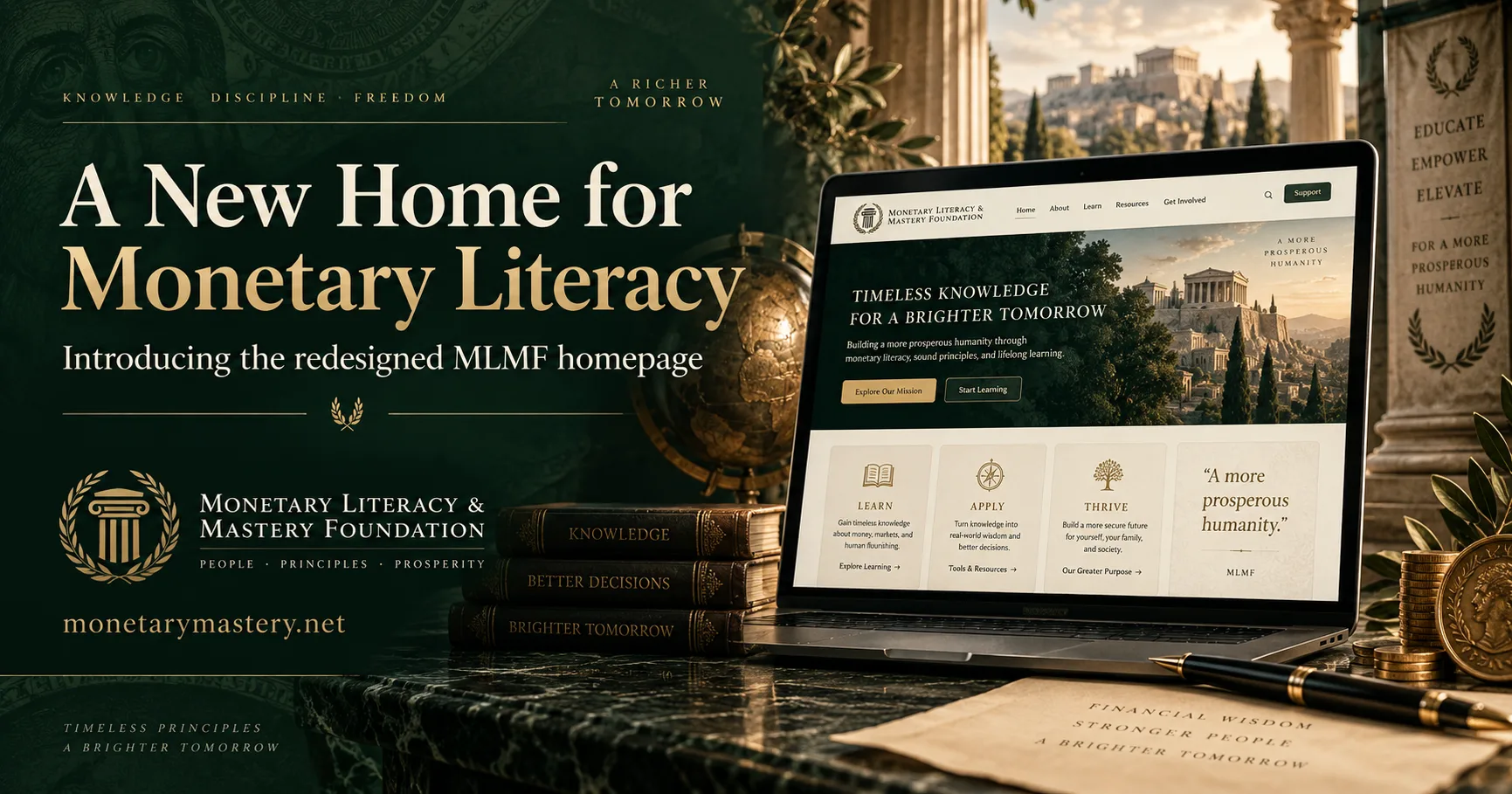
The Monetary Literacy & Mastery Foundation has a new front door.
Our redesigned homepage was built around a simple goal: make it easier to understand what the Foundation is, why monetary literacy matters, and where to begin.
The Foundation has grown considerably. What began as a collection of lessons and discussions now includes a structured Academy, interactive monetary simulators, an inflation calculator, a monetary glossary, teaching materials, research resources, assessments, extended studies, and an active community.
The old homepage could point visitors toward those resources. The new one is designed to explain how they fit together.
Start With the Bigger Question
The new homepage opens with the idea at the heart of MLMF:
Master the Monetary System.
Personal finance usually begins with questions such as how to budget, save, invest, borrow, or prepare for retirement. Those are important skills—but they all operate inside a larger monetary environment.
Interest rates change. Credit expands and contracts. Currency loses or gains purchasing power. Banks create deposits through lending. Monetary policy influences borrowing conditions, asset prices, and economic activity.
Understanding that environment provides context for the financial decisions people make within it.
That distinction is now much more prominent on the homepage:
Financial literacy asks: How should I operate within the system?
Monetary literacy asks: What is the system, and why does it behave this way?
That is the foundation beneath much of what we teach.
A Clearer Path Into the Foundation
One of the biggest goals of the redesign was to eliminate the feeling that a new visitor has to figure out the site before they can begin learning.
The new Begin Your Journey section provides three clear directions.
Curriculum leads into the Academy and its structured study of money, banking, monetary policy, and the financial system.
Experiment leads toward our interactive tools and simulators, where concepts can be explored visually by changing assumptions and observing what happens.
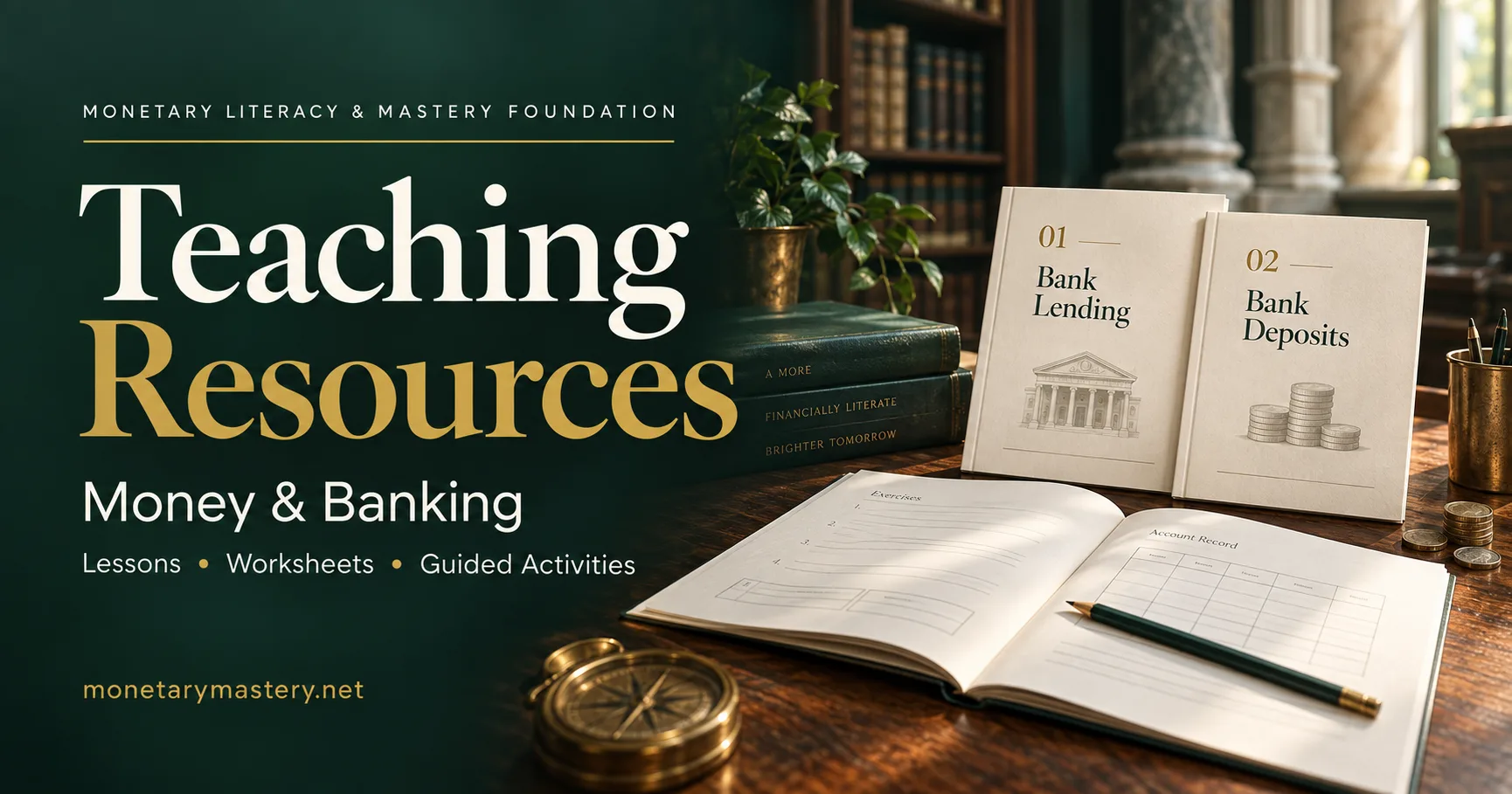
Teach points educators, homeschool families, and independent learners toward materials designed to make monetary education easier to introduce and discuss.
These are different ways of engaging with the same subject: study the ideas, explore the mechanics, and share what you learn.
More Than Articles
Monetary systems can become abstract very quickly. Definitions and explanations are useful, but some concepts become much easier to understand when you can interact with them.
That is why MLMF has increasingly developed tools alongside traditional lessons.
Visitors can explore how commercial bank lending creates deposit money, follow the distribution of newly created purchasing power through the Cantillon Effect, examine inflation and purchasing power, and investigate the relationship between debt and money creation.
Our expanded resource collection also includes:
the Research Directory for outside sources, institutions, websites, publications, and further study;
Interactive Monetary Simulators for exploring monetary mechanics;
the Inflation Calculator for examining inflation and changing purchasing power;
the Monetary Glossary for definitions, institutions, and foundational concepts;
and Teaching Resources for educators, homeschool families, and independent study.
The goal is not simply to provide more content. It is to provide different ways to investigate the same system.
Seeing Beyond Familiar Explanations
The redesigned homepage also places greater emphasis on questioning assumptions.
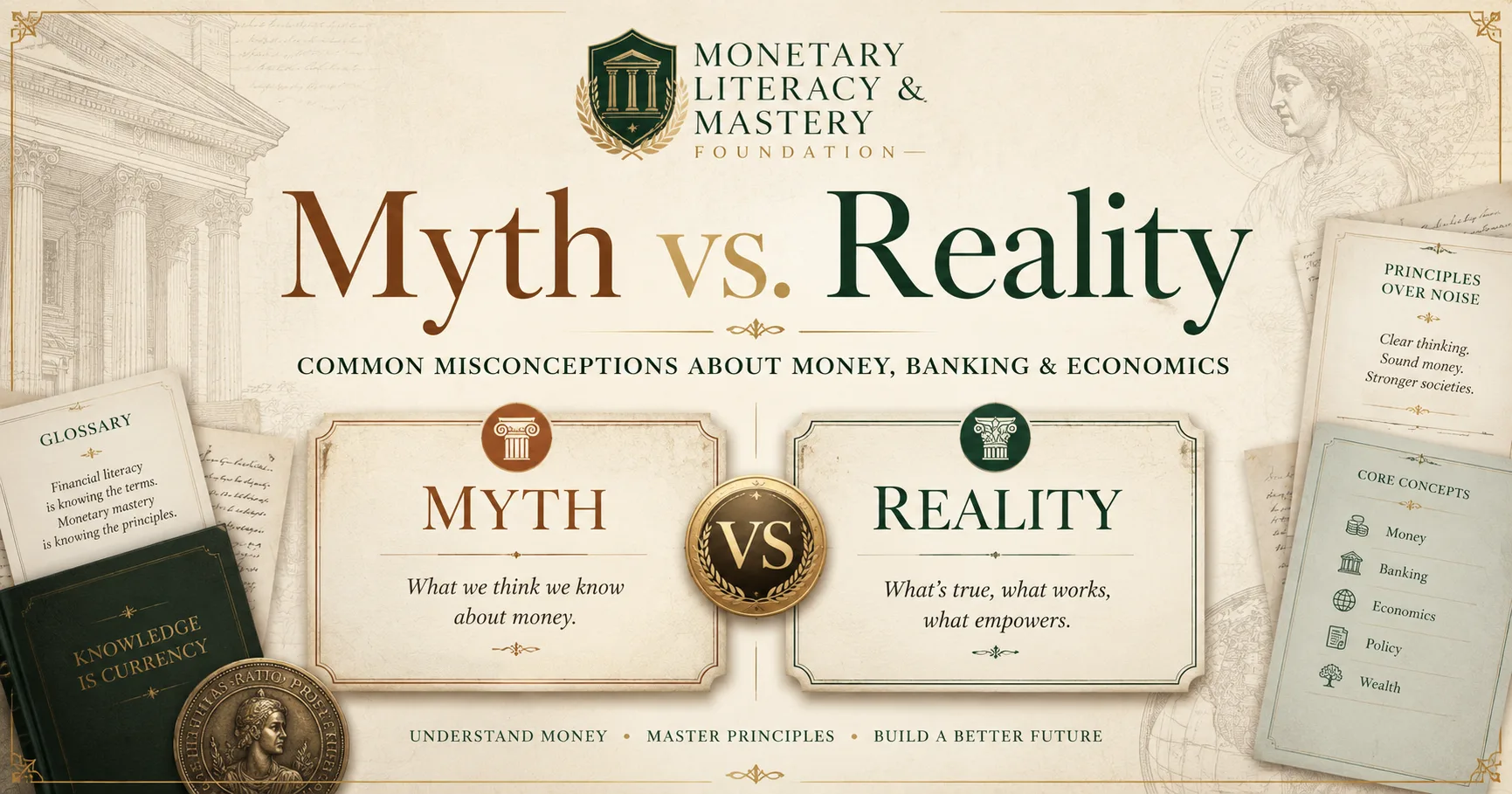
Our Myth vs. Reality material asks visitors to examine familiar claims about money, banking, inflation, and monetary policy rather than simply accepting commonly repeated explanations.
That does not mean replacing one set of talking points with another.
It means learning enough about the mechanics to ask better questions.
Where does money come from?
What actually happens when a commercial bank makes a loan?
What is the difference between money and currency?
What backs modern currency?
Who receives newly created purchasing power first?
What happens to savings when prices rise faster than income?
Those questions sit at the center of monetary literacy.
Independent Education Remains the Mission
The appearance of the site has changed, but the mission has not.
The Monetary Literacy & Mastery Foundation exists to provide independent, structured education on money, banking, and the monetary system.
Our goal is to help people build enough understanding to think more clearly, investigate claims for themselves, and better understand the forces shaping everyday economic life.
The new homepage reflects that mission more directly.
It introduces the ideas.
It provides clear paths forward.
And then it gets out of the way so you can explore.
The Foundation Is Becoming a Learning Environment
Perhaps the most important change is that MLMF is increasingly becoming more than a collection of pages.
The Academy provides structure.
The simulators provide experimentation.
The glossary provides reference.
The Research Directory provides outside sources.
Teaching Resources make the material easier to share.
Community discussions provide a place to question, challenge, and explore ideas with others.
Together, those pieces create something closer to a monetary learning environment.
And the new homepage is designed to be its entrance.
Explore the New Homepage
Visit www.monetarymastery.net and take a look around.
Whether you want to follow the curriculum, experiment with the monetary system, research a question, teach the material, or simply understand why prices, credit, banking, and monetary policy matter to your life, there is now a clearer place to begin.
Knowledge builds freer people.